Welcome to Springboard Heifers!


Our mission is to alleviate poverty among youthful small-holder dairy farmers, by promoting environmental resilience through an accelerated production that hinges on cutting-edge assisted reproduction biotechnologies to rapidly multiply high-producing heifers, mainstreaming regenerative husbandry practices powered by a hub-and-spoke model for extension services, leveraging on peer-to-peer sodality, and strategic marketing to enhance both dairy production and the income of young small holder farmers.
University of Buea provides technical support on apiculture to Springboard Partners Investments (SPI)
This week, 31/5/ 2024, Dr Ewane Divine (PhD) of the Department of Animal Science of the Faculty of Agriculture and Veterinary Medicine of the University of Buea, led a team of personnel and students to explore apiculture potentials at the Template Farm, Betika - Ndian division. They were received by Mrs Wirba Odette Ngewiyi, Head of the dairy heifer multiplication scheme at Template Farm.
The team was composed of the following:
1. Dr Ewane Divine (PhD); Ag Head of Department and Principal Investigator: Support Programme for the University of Buea Livestock Production and Agripreneurship Students Business Incubator (SP UB LPA SBI),
2. Dr Cham David; Assistant Lecturer, Apiculturist and Head of Apiculture Unit,
3. Mr Monono David Livestock Technician,
4. Mr Ebai Neville; Level 500 student, specialising in Apiculture
5. Mr Itoe Azel: Level 500 student, specialising in Apiculture
We would like to thank them sincerely for their interest in improving livelihoods and resilience by aligning forces with that of Springboard partners. It is our hope that we can weld a robust partnership.
News & Updates
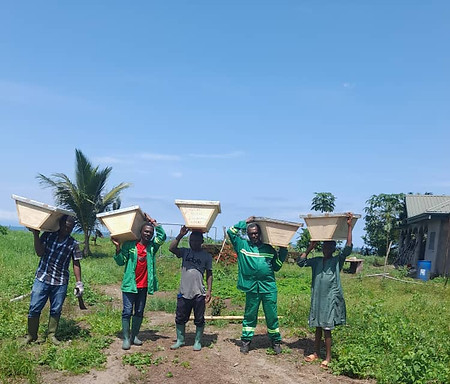

The support from the University's extension efforts comes barely a week after celebrations marking this year's World bee day (Saturday, May 20, 2024). The observance of World Bee Day worldwide aims to draw the attention of the world’s public and political decision-makers to the importance of protecting bees and remind us that we depend on bees and other pollinators. Bee Day celebrations raise awareness about the threats to pollinators like bees by human activities.
At Template Farms we firmly believe that apiculture, (beekeeping) plays a significant role in the context of cattle dairy farming. Here are some key points we hold close to our hearts to highlight the importance of this:
1. Pollination of Forage Crops: Bees are crucial for the pollination of many plants, including those used as forage crops for dairy cattle. Plants like clover and alfalfa, which are essential for high-quality fodder, benefit from bee pollination, leading to better yields and more nutritious feed for cattle.
2. Increased Crop Yields: Enhanced pollination through apiculture can lead to increased yields of crops grown in rotation or alongside forage crops. This can result in better overall farm productivity and profitability.
3. Biodiversity and Ecosystem Health: Beekeeping supports biodiversity and the health of the farm ecosystem. Healthy ecosystems contribute to more resilient farming operations, which can better withstand pests, diseases, and environmental changes.
4. Honey and Other Bee Products: Apiculture provides additional revenue streams through the production of honey, beeswax, propolis, and other bee-related products. This diversification can improve the economic stability of a dairy farming operation.
5. Sustainable Farming Practices: Integrating apiculture into dairy farming promotes sustainable agricultural practices. It encourages the use of fewer chemical inputs, as farmers become more conscious of the need to protect bee populations.
6. Educational and Community Engagement: Beekeeping can also serve as an educational tool, fostering greater community involvement and awareness about the importance of bees and sustainable farming practices.


By integrating apiculture into dairy farming, farmers can enhance their overall productivity, contribute to environmental sustainability, and create new economic opportunities. What greater satisfaction can we have knowing that a potentially profitable dairy farming can contribute to environmental sustainability through the integration of apiculture in the operational space. Many thanks to Dr Ewane Divine and his team!!!